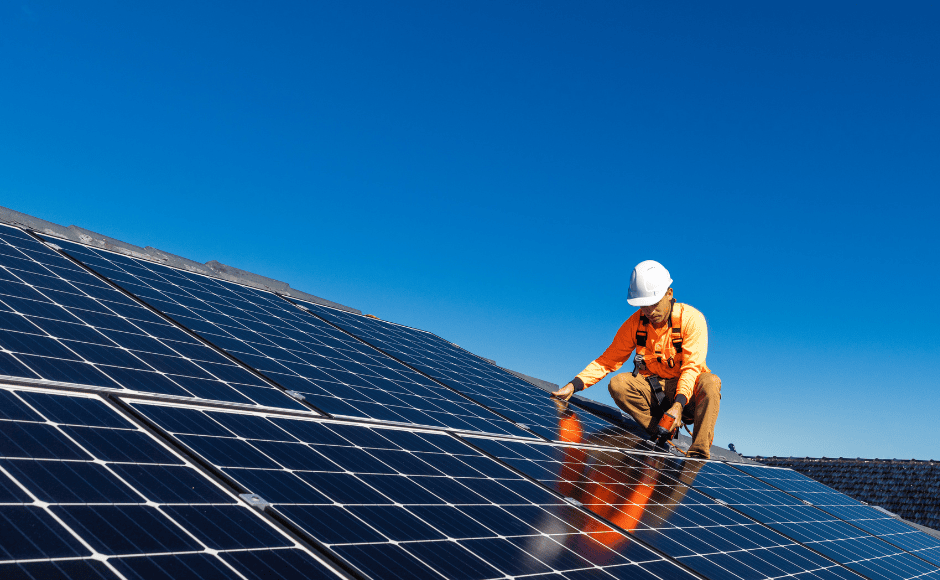
If you’re considering installing a solar energy system in Michigan, understanding your financing options, available incentives, and the maintenance requirements is essential. This second article in our two-part series walks through what homeowners and business owners in Michigan should know.
Financing your system
There are several ways to finance solar panels, each with different benefits and trade-offs:
- Cash purchase: Homeowners who pay upfront own the system outright and can fully capture long-term savings and tax credits. Cash purchases can offer the highest return on investment over time.
- Solar loans: Many Michigan homeowners and businesses use low-interest loans to spread out the costs. For example, the Michigan Saves Home Energy Loan Program offers low interest rate loans for solar and other energy upgrades.
- Leasing or power purchase agreements (PPAs): With a lease or PPA, a third party owns the system, and homeowners pay a fixed monthly fee or a rate per kilowatt-hour generated. Leasing reduces upfront costs, but not everyone qualifies for tax credits, and long-term savings tend to be lower.
- Refinancing, home equity, or HELOC: Some homeowners use cash-out refinancing or a home equity line of credit (HELOC) to fund the system. This allows for ownership and credit eligibility but uses the home as collateral.
When choosing a financing path, compare monthly payments, total cost over time, and whether you’ll own the system, as this affects your eligibility for incentives.
Incentives in Michigan
Michigan offers a mix of programs that can reduce upfront costs and tax burdens.
- Property tax exemption: In Michigan, the added value of a solar installation is exempt from property tax increases, helping protect the investment.
- Distributed generation/inflow-outflow billing: Although traditional net metering has ended, some utilities still credit excess generation through Michigan’s distributed generation program.
- Utility-specific rebates: Some local utility companies still offer cash rebates for solar systems.
Maintenance and long-term planning
Owning a solar system means thinking beyond installation. Here’s what to plan for:
- Warranty and performance monitoring: Most solar panels come with 25- to 30-year performance warranties, and many installers include monitoring systems that track output and detect issues.
- Routine inspection and upkeep: Although solar systems require minimal maintenance, Michiganders should check for snow cover, leaf or debris accumulation, and roof integrity. Ensuring the inverter and wiring remain clean and functional maximizes lifetime production.
- Battery storage considerations: If the system includes a battery, plan for periodic system checks, firmware updates, and eventual battery replacement depending on chemistry and usage.
- Resale and home value: Solar can increase a home’s resale value, helping to justify the investment.
- Changes in utility policies: Michigan’s utility programs and billing rules evolve. Stay informed about interconnection policies and how utility companies manage exported energy.
- Installer choice and documentation: Hire licensed, experienced installers to ensure that the system is properly permitted and meets local codes. Keep documentation for warranties, rebates, and tax credit eligibility.
Get affordable financing for solar panels with Michigan Saves
Michigan Saves, the nation’s first nonprofit green bank, offers low interest rate loans to finance solar panels and other energy-saving upgrades. We can help you turn your home or business into a comfortable and efficient space. Get started with Michigan Saves by finding an authorized Michigan contractor in your area and unlocking new energy-saving opportunities.